
Wedding Flowers in Dubai: A Complete Guide to Bridal Bouquets, Ceremony & Reception Florals

Most flowers get chosen in a few minutes at checkout. Wedding flowers don’t get that luxury — they’re photographed from every angle, they need to hold up for hours under lights or Dubai sun, and after the venue itself, they’re often the single biggest styling decision of the day. Whether you’re planning an intimate rooftop ceremony or a five-hundred-guest ballroom reception, here’s how to think through wedding flowers in Dubai so the result looks effortless, even though it wasn’t.
What Makes Wedding Flowers Different From a Regular Bouquet Order
A wedding isn’t one bouquet, it’s a whole floral programme. There are personal flowers (the bridal bouquet, bridesmaids’ bouquets, boutonnières, corsages), ceremony flowers (aisle markers, an arch or kosha backdrop, welcome signage), and reception flowers (centrepieces, the head table, sometimes a full room transformation). Each of these needs to be designed as one cohesive look, arrive fresh at a precise time, and survive being set up hours before anyone sees it. That’s why most couples work with a florist through a proper consultation rather than placing a single online order, and why it’s worth starting the conversation early.
How Much Do Wedding Flowers Cost in Dubai?
Wedding flower budgets vary enormously, and a handful of factors do most of the work in moving the number up or down:
- Guest count and venue size — more tables and a larger room simply need more flowers to avoid looking sparse.
- Flower choice — seasonal roses and hydrangeas are generally more accessible than imported peonies, garden roses, or ranunculus, which are flown in and priced accordingly.
- Personal flowers vs. full venue styling — a bridal bouquet and a few boutonnières sit at one end of the scale; a full ceremony backdrop, aisle, and reception centrepieces for every table sit at the other.
- Structural elements — a floral arch, hanging installation, or fully dressed kosha stage adds significantly more cost than tabletop arrangements alone, since it involves mechanics and labour beyond the flowers themselves.
As a general rule, wedding flowers tend to become the second- or third-largest line item after the venue and catering, so it’s worth setting a rough floral budget early and sharing it honestly with your florist — a good one will help you prioritise where it makes the most visual impact.
Choosing Your Bridal Bouquet Style
The bouquet is the one piece of wedding florals that’s in almost every photo, so it’s worth getting right for your dress and venue, not just your favourite flowers.
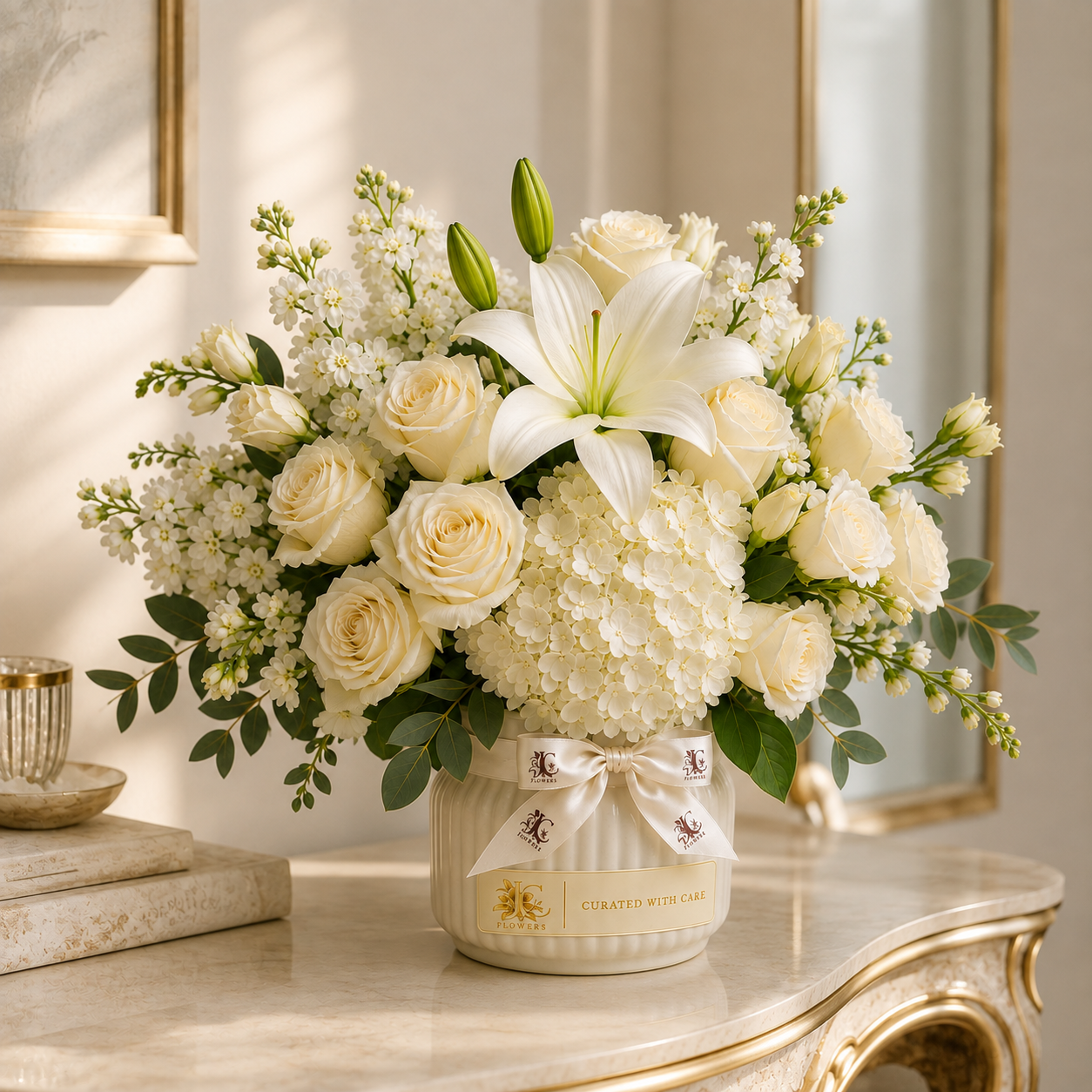
- Round or posy bouquets are dense, classic, and endlessly versatile — a safe, elegant choice for most gown styles. A refined, all-white design like Ivory Poise falls into this category.
- Cascading bouquets trail downward and read as formal and dramatic, best suited to ballroom weddings and fuller gowns with more fabric to balance against.
- Hand-tied garden-style bouquets are looser and more textural, mixing bloom sizes for a relaxed, editorial look. Ivory Still Life is a good example of this softer silhouette.
- Single-stem or pageant bouquets are minimal and modern — a handful of statement blooms rather than a full arrangement, suited to sleek, contemporary styling.
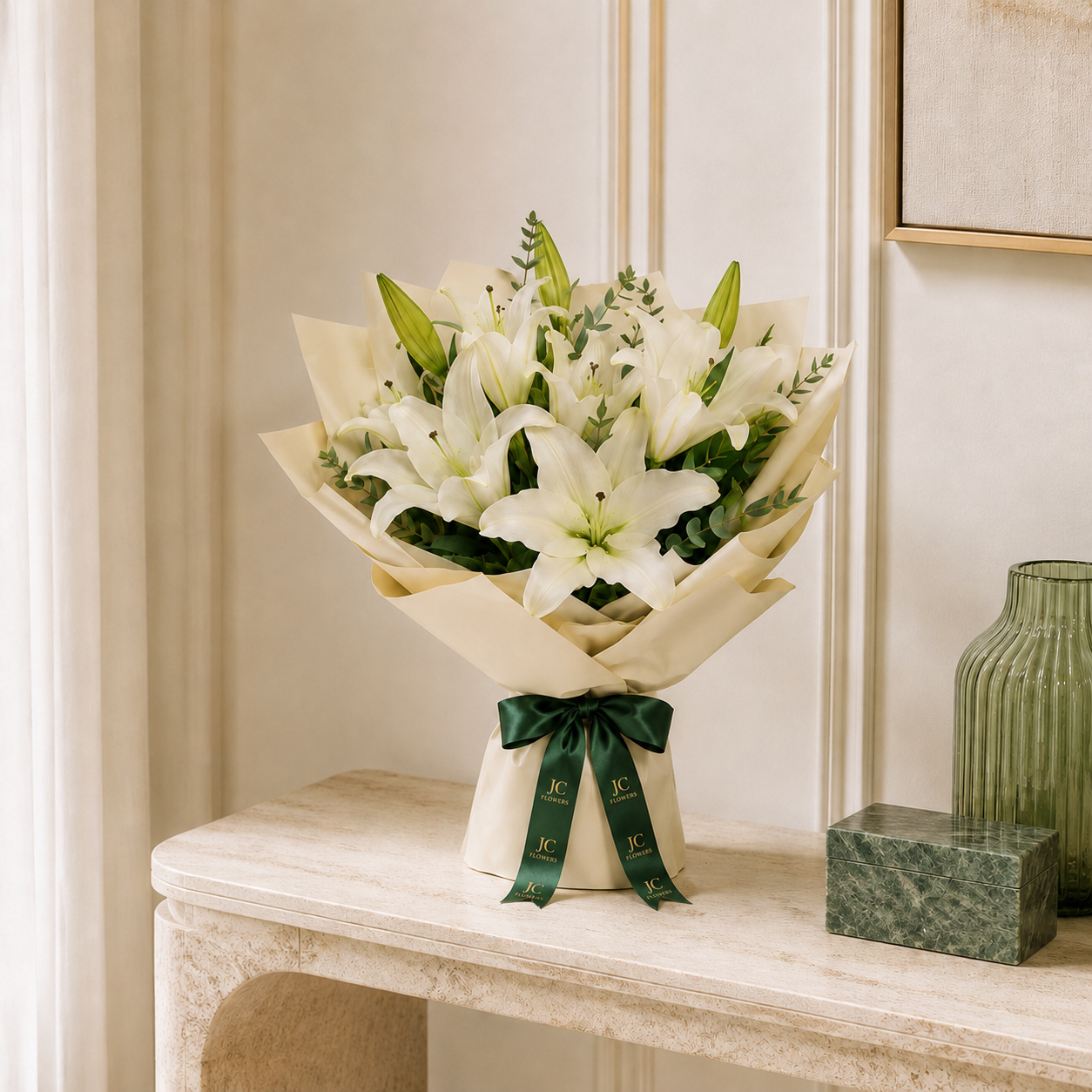
Many brides also carry a small nod to tradition with “something blue” tucked into the design — a few stems of hydrangea, like those in Hydrangea Silhouette, work well worked subtly into an otherwise neutral bouquet.
Ceremony, Kosha & Reception Florals
Beyond the bouquet, a few key areas tend to get the most floral attention at Dubai weddings:
- The kosha or backdrop — the elevated stage where the couple sits, a staple of Gulf wedding celebrations, is often the single most photographed structure of the night and typically carries the heaviest floral investment.
- Aisle and entrance — ground arrangements, hanging installations, or simple petal-lined pathways set the tone the moment guests arrive.
- Centrepieces — tall, dramatic arrangements suit formal ballrooms, while low, garden-style clusters encourage conversation across the table and photograph well at eye level.
- The welcome table and signage — an easy way to extend the floral theme into the first thing guests see without a large additional budget.
Matching Flowers to Dubai’s Climate and Venue
Dubai’s heat shapes wedding planning more than most cities, which is part of why so many ceremonies happen in the evening rather than the afternoon. Even so, flowers often still spend time outdoors during setup, photos, or an outdoor cocktail hour, so it’s worth choosing blooms that hold up well rather than only the ones that look best on a mood board.
Sturdier flowers — orchids, anthuriums, and hydrangeas among them — tolerate heat and transport better than delicate imported blooms like peonies or garden roses, which are worth reserving for indoor, air-conditioned spaces where they’ll actually be seen at their best. If your ceremony or photos will spend real time outdoors, it’s worth raising this directly with your florist so the design can be adjusted accordingly. For the flowers you take home afterwards — the bouquet, boutonnières, or any arrangements from the day — our guide on how to make flowers last longer in Dubai’s heat covers how to keep them looking their best for as many extra days as possible.
Timeline: When to Book Your Wedding Florist in Dubai
Popular Dubai venues and peak wedding season dates get booked well in advance, and florists’ calendars follow the same pattern. As a general guide:
- 9–12 months before: book your florist, especially for popular dates between October and April.
- 4–6 months before: finalise your overall floral style, colour palette, and rough budget allocation.
- 4–6 weeks before: confirm final flower choices, quantities, and any structural elements like an arch or kosha design.
- 1–2 weeks before: lock in final guest and table counts so centrepiece numbers can be finalised.
Working With JC Flowers for Your Wedding Day
Every wedding is different, which is why we design most wedding work through Bespoke by JC Flowers rather than a fixed catalogue arrangement — it lets us build your bouquet, ceremony, and reception florals around your palette, venue, and budget in one consultation rather than piecing it together after the fact. If you’re also coordinating flowers for guests, family, or thank-you gifts around the wedding itself, our broader guide to buying flowers online in Dubai is a useful companion for the rest of the celebration.
Frequently Asked Questions
How far in advance should I book my wedding florist in Dubai?
Ideally 9–12 months before the wedding, particularly for popular venues and dates during the cooler October-to-April season, when calendars fill up fastest.
How much should I budget for wedding flowers in Dubai?
It depends heavily on guest count, flower choice, and how much of the venue you’re dressing, but wedding flowers commonly rank as the second- or third-largest budget item after the venue and catering.
Can flowers survive an outdoor wedding in Dubai’s heat?
Yes, with the right choices. Hardier blooms like orchids, anthuriums, and hydrangeas cope with heat far better than delicate imports like peonies, so it’s worth discussing outdoor exposure with your florist when choosing your flowers.
Do I need a separate florist for the bridal bouquet and venue decor?
No, most couples use one florist for everything, since it’s the easiest way to keep the bouquet, ceremony backdrop, and reception centrepieces feeling like one cohesive design rather than several unrelated pieces.
What flowers are best for a Dubai wedding?
It depends on the venue, but roses, hydrangeas, orchids, and lilies are reliable, widely available choices, while imported blooms like peonies and garden roses are better suited to indoor, air-conditioned settings.
Can JC Flowers create a custom wedding package?
Yes, wedding work is designed through a bespoke consultation rather than a fixed catalogue arrangement, so the bouquet, ceremony, and reception florals can be built specifically around your venue, palette, and budget.